

What Is the Best Sunscreen for Swimmers?
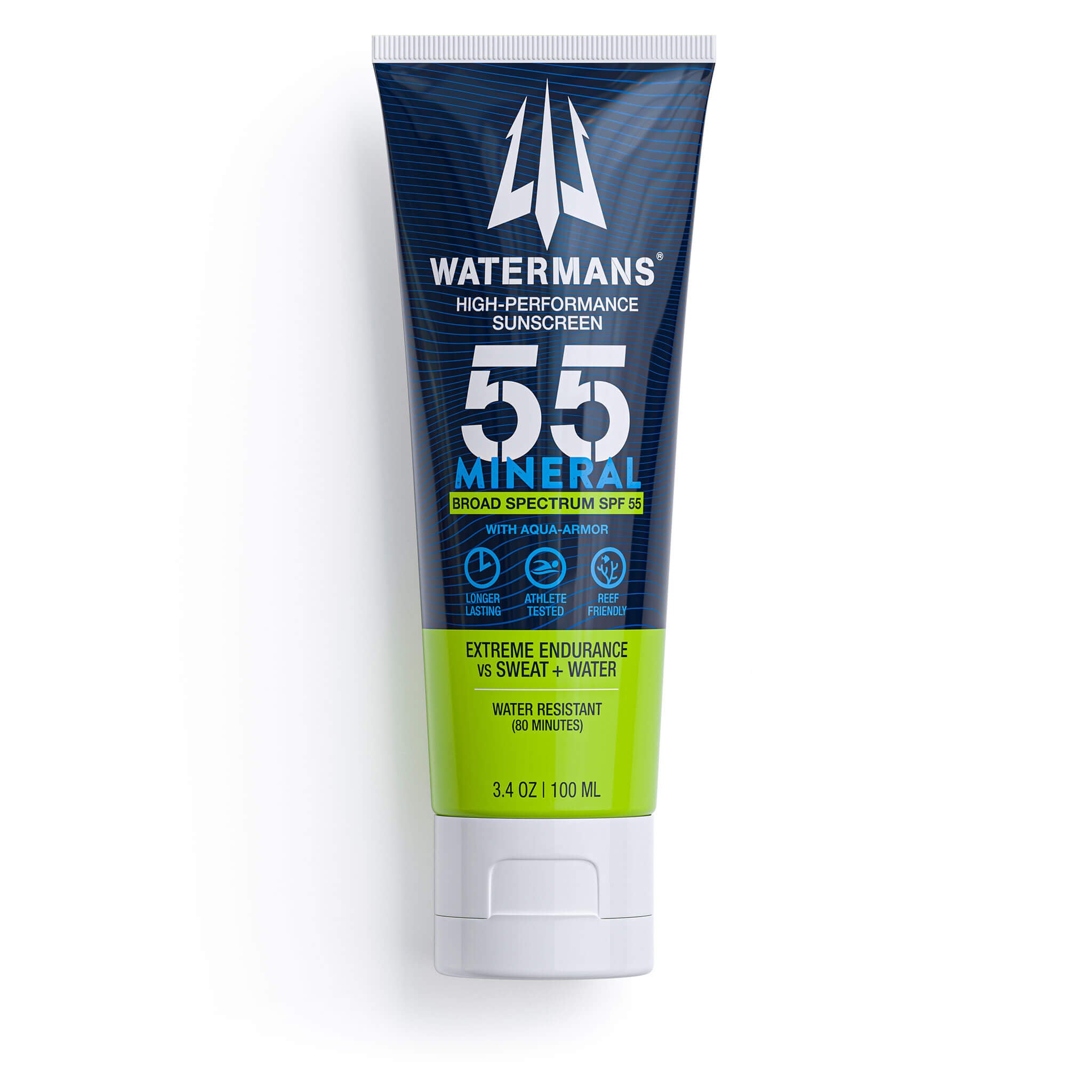
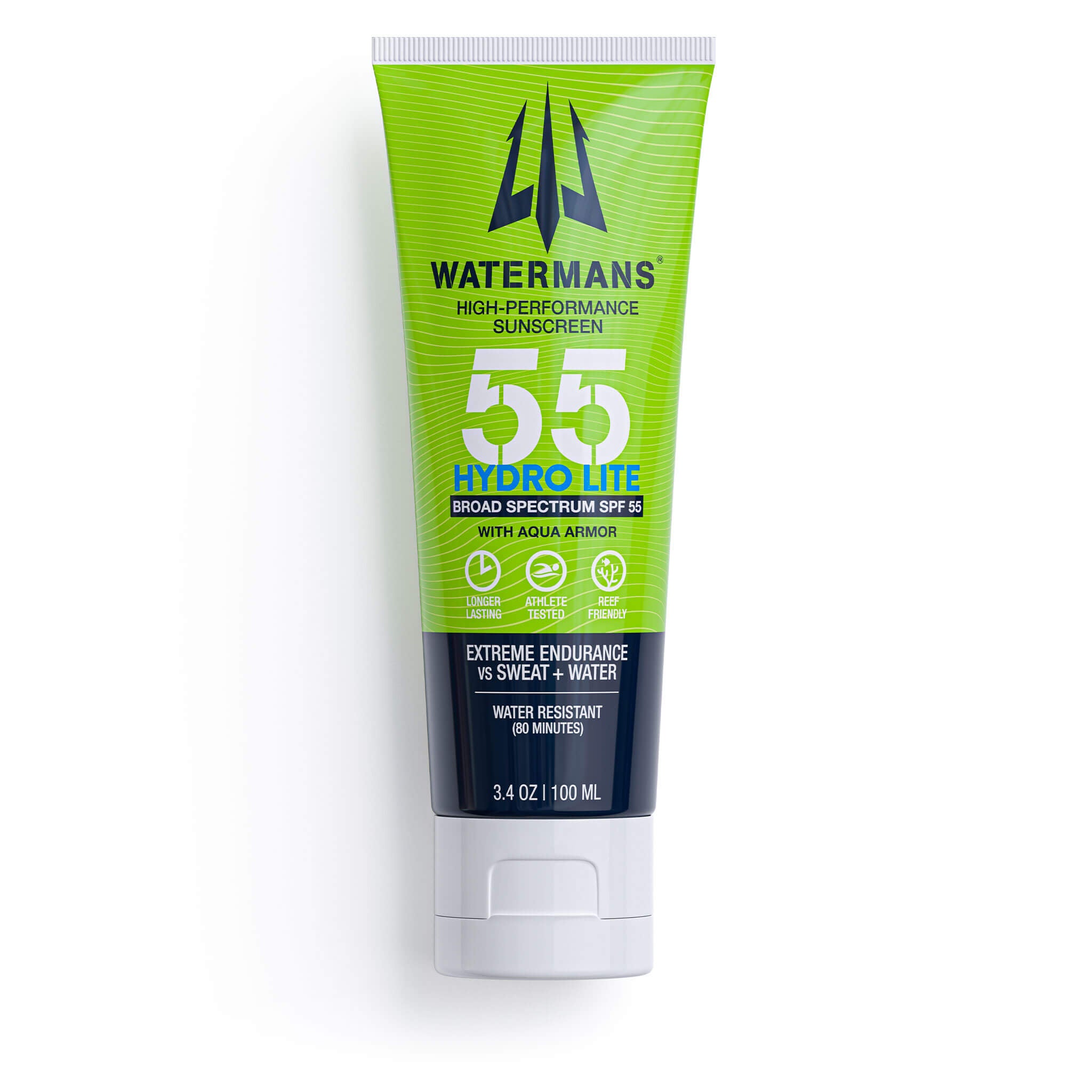
Watermans Mineral SPF 55 and Hydro Lite SPF 55 are independently commissioned immersion tested to 8 hours of water resistance, six times the FDA's 80-minute standard most swim sunscreens are held to. A training block of laps, open water sets, or a long-distance swim outlasts a standard formula well before the session ends. The best sunscreen for swimmers is one built for the actual duration of a workout, not a single dip.
The 8-Hour Difference for Pool and Open Water
Under FDA guidelines, sunscreen can only claim water resistance for a maximum tested duration of 80 minutes, and most sport sunscreens are built and tested to exactly that ceiling. A distance swimmer or open water athlete training for two or more hours pushes well past that window before ever leaving the water. Watermans tests Mineral SPF 55 and Hydro Lite SPF 55 to 8 hours of water resistance through independently commissioned immersion testing, built specifically for sessions that outlast the FDA's standard.
Mineral or Hydro Lite: Matching the Formula to the Swim
Mineral SPF 55 uses a zinc-based, oxybenzone-free formula built for full-session coverage in the lineup. Hydro Lite SPF 55 carries the same 8-hour Aqua-Armor water resistance in a lighter lotion, useful for swimmers who want less product weight during long continuous strokes. Both formulas are built for the same durability, the difference is texture and feel rather than protection level, and either holds up through repeated pool exits and re-entries during interval training.
Face Protection for Open Water Swimmers
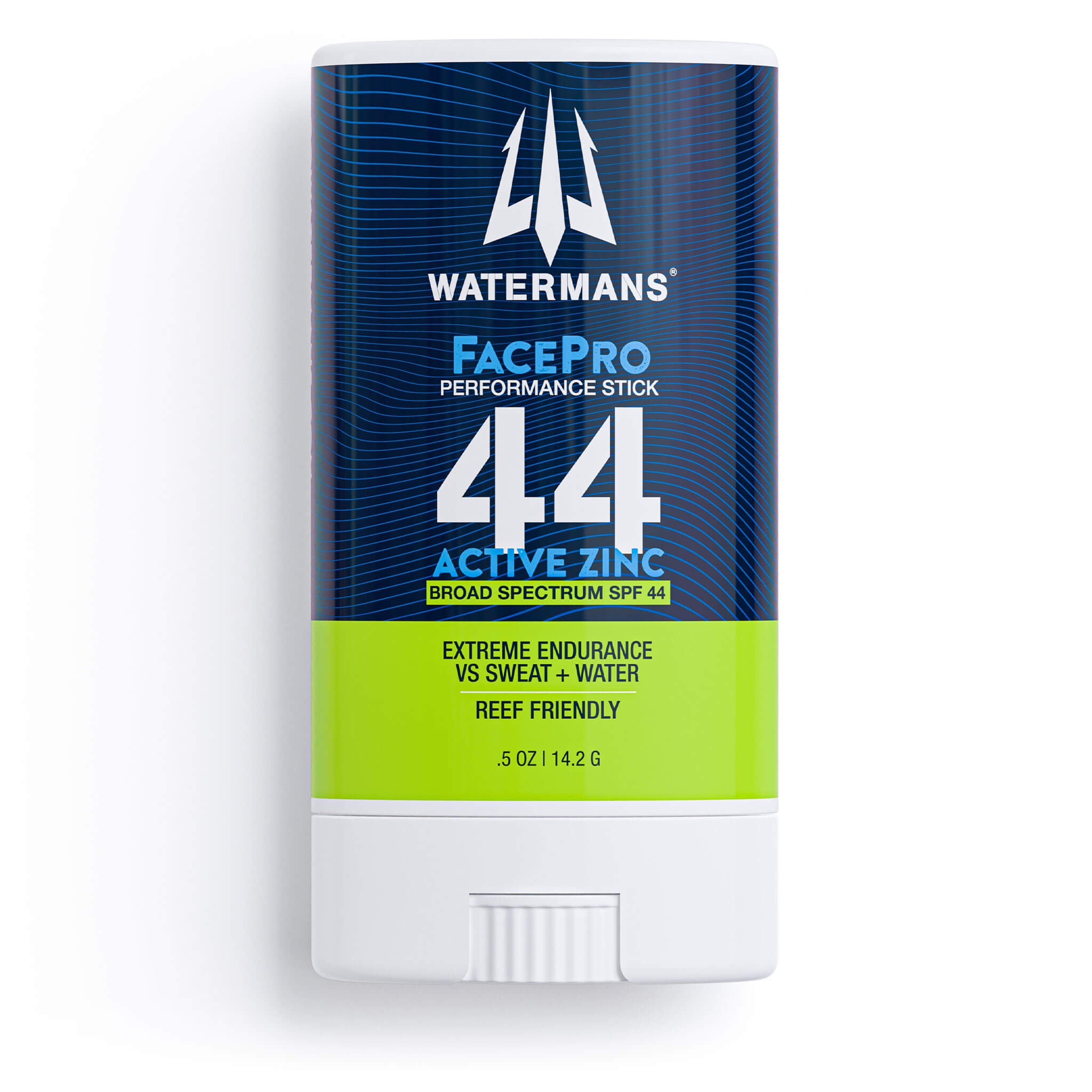
Open water swimming exposes the face to direct sun and water reflection for the entire session, with no wall or lane rope to break up the exposure the way a pool session does. FacePro Stick SPF 44 is built for that gap: a precision, no-drip stick that applies clean with wet hands before a swim and travels easily in a swim bag for a quick touch-up before a second loop or leg of a longer event.
How to Apply Sunscreen Before a Swim Session
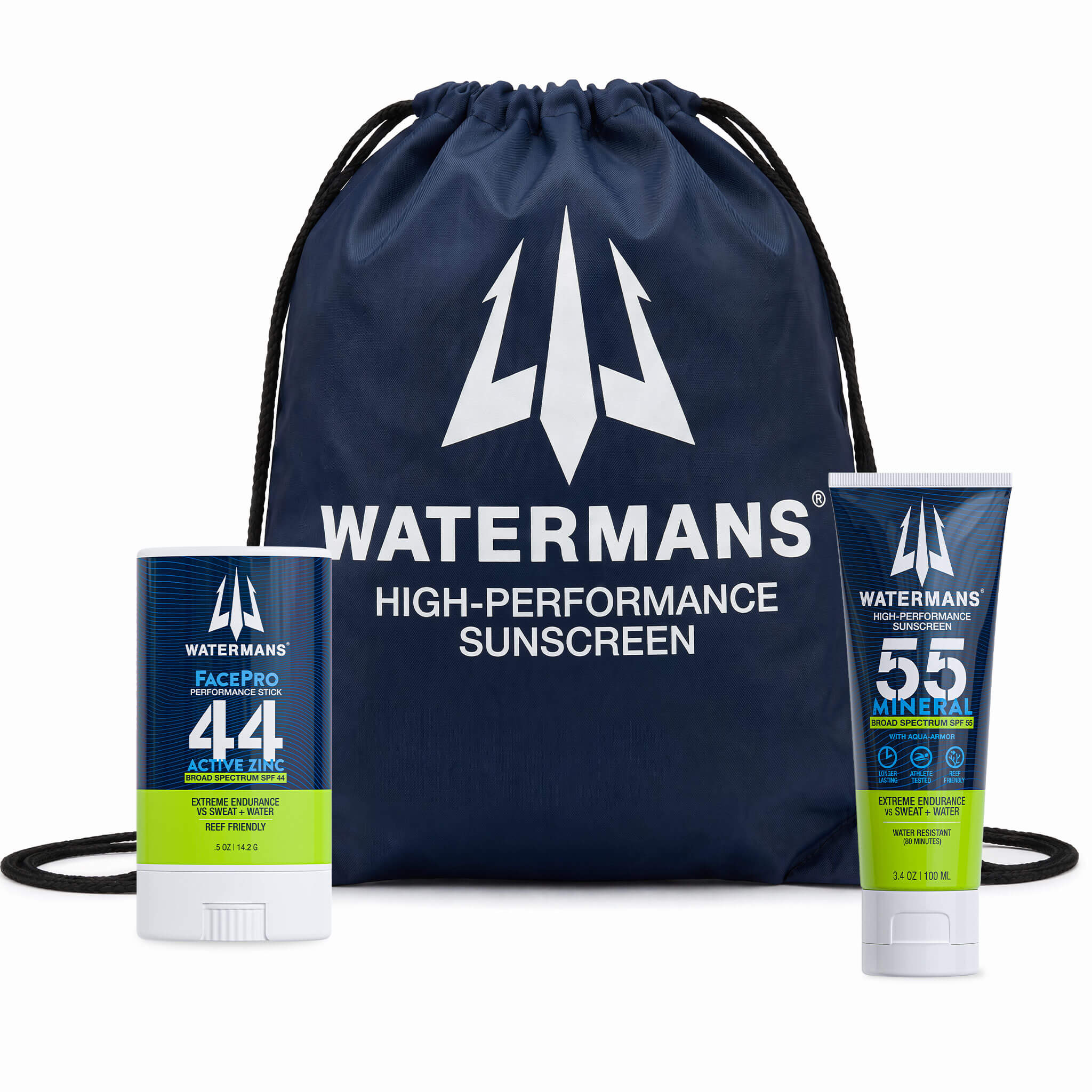
Apply Mineral SPF 55 or Hydro Lite SPF 55 at least 15 minutes before entering the water, covering the shoulders, upper back, and backs of the legs, areas swimmers commonly miss since they are hard to reach solo and sit directly under overhead sun during freestyle and backstroke. Goggle straps and cap lines are a common gap too, since sunscreen applied right up to the edge of gear can wear off from repeated friction over a long session. Use FacePro Stick SPF 44 for the face immediately before entering the water. The Full Sun Kit pairs Mineral SPF 55 with a stick-format product for exactly this kind of full-session, full-coverage routine in one purchase.
Pool Chlorine, Open Water, and Whether It Changes the Math
Pool chlorine and open water exposure both wear down sunscreen through repeated water contact, but a pool session typically includes more frequent wall touches and turns that can rub product off at the shoulders and upper arms specifically. Open water swims trade that friction for longer uninterrupted stretches in direct sun with no lane markers or shade breaks. Both settings benefit from the same 8-hour Aqua-Armor standard, since the underlying problem in either case is a formula that runs out mid-session, not a difference in water chemistry.
Sunscreen, Goggles, and Avoiding Fogged Lenses
Sunscreen that migrates from the forehead into goggles during a long swim is a common complaint, and it usually comes down to how much product sits right at the goggle seal rather than the formula itself. Apply sunscreen to the forehead and temples before putting goggles on, and let it set for a few minutes rather than pulling straps on immediately after application. A lighter formula like Hydro Lite SPF 55 tends to migrate less under a tight goggle seal over a long set compared to a heavier lotion.
The Water Resistant Myth Swimmers Run Into Most
No sunscreen is truly waterproof, including Watermans products, and no sunscreen sold in the U.S. can legally carry that claim. Water resistant means a formula has been tested to maintain its labeled SPF for a specific duration of water exposure, not that it cannot wash off entirely under a long continuous swim. A multi-hour training block or event wears down any formula faster than a short recreational swim would, which is worth factoring into when a swimmer checks coverage rather than waiting for a fixed time to pass.
Building a Swim Sun Routine That Actually Holds
Start with a formula tested past the FDA's 80-minute ceiling, since that spec removes most of the reapplication guesswork a long training block or open water event creates. Cover the face separately with a stick format that survives wet hands and repeated goggle adjustments better than a lotion bottle does. Treat a long open water swim as a reason to check coverage on exposed areas like the shoulders and upper back before a second loop, since these zones see repeated direct exposure with no shade the entire time. Outplay the sun, not just outlast the swim.
Key Takeaways
-
8 hours covers a full training block, not just one set.
Mineral SPF 55 and Hydro Lite SPF 55 are independently tested to 8 hours of water resistance, six times the FDA's 80-minute standard. -
Open water swimmers face the same exposure problem surfers do.
Long, uninterrupted sessions in direct sun with no shade breaks call for the same 8-hour standard. -
The face needs separate, dedicated coverage.
FacePro Stick SPF 44 targets the zone goggles and cap lines wear down fastest.

