

What Is the Best Sunscreen for Lifeguards?
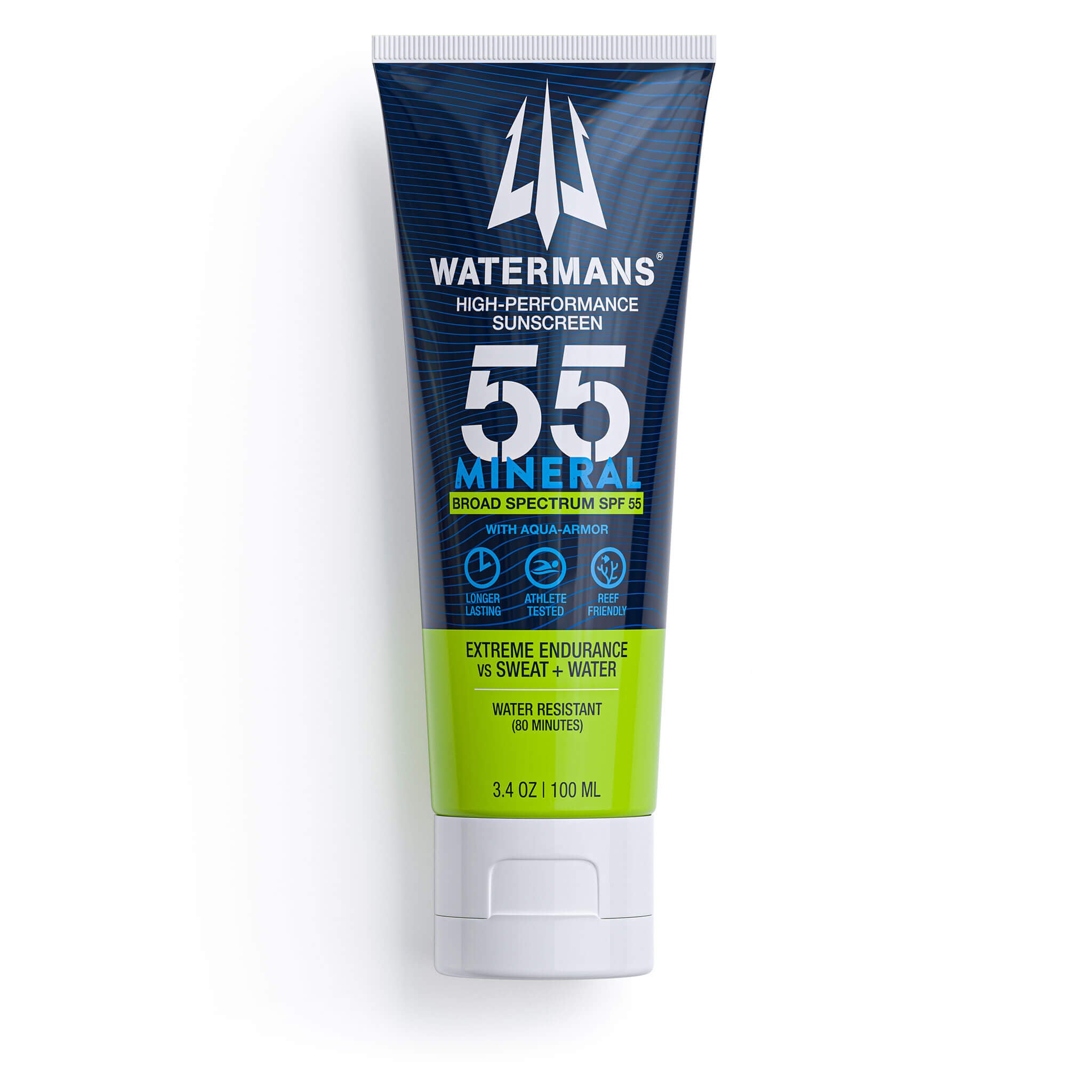
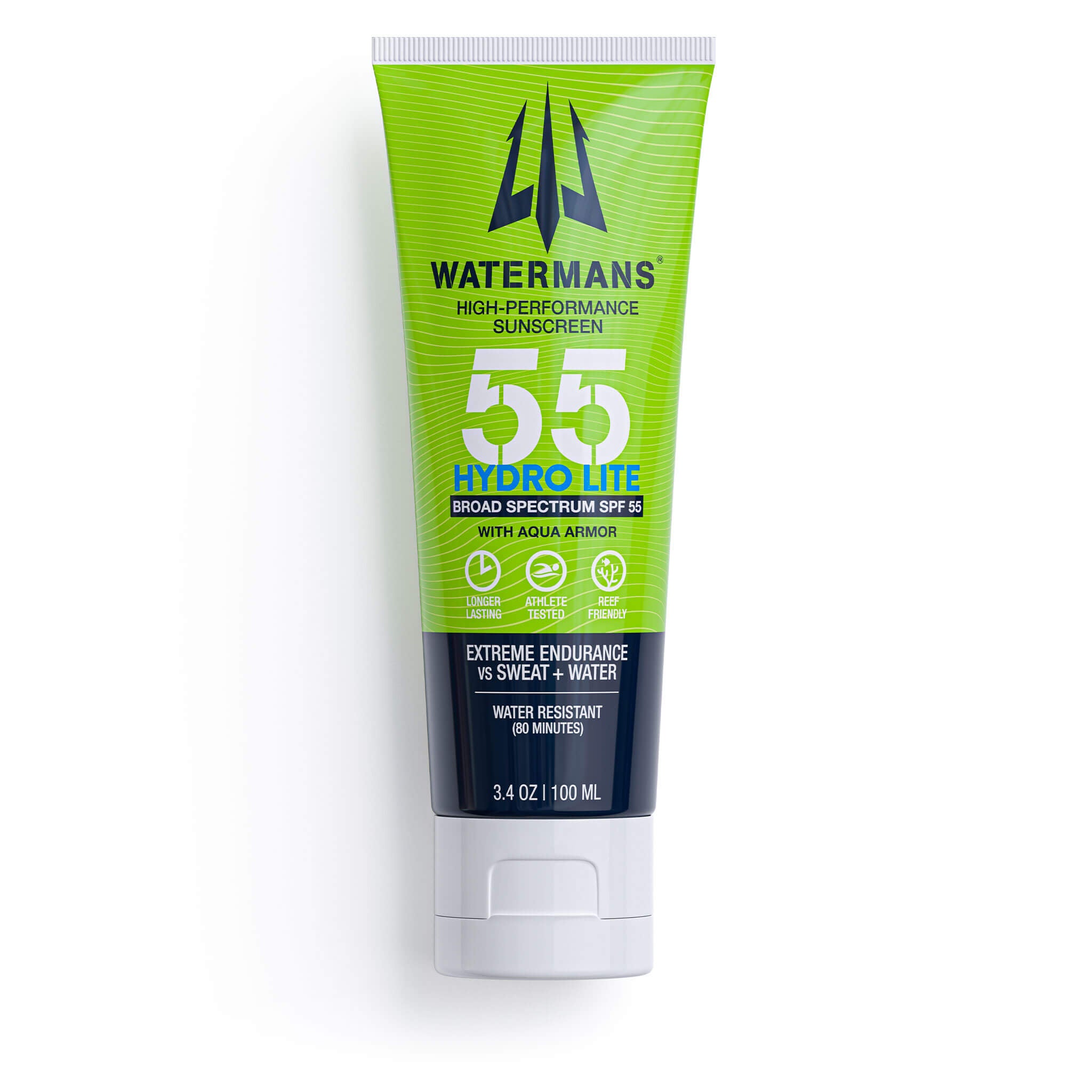
The best sunscreen for lifeguards is one built for duration, not just coverage. A lifeguard's job puts them in direct sun for an entire shift, often four to eight hours, with repeated entries into the water and no realistic window to step away and reapply every time the FDA's standard water resistance rating runs out. Watermans Mineral SPF 55 and Hydro Lite SPF 55 are formulated with Aqua-Armor technology, independently commissioned immersion testing confirming 8 hours of water resistance. That is the starting point for choosing sunscreen for lifeguard duty: a product designed to survive the actual length of the job, not just a single swim.
The 8-Hour Difference That Matters on Duty
Under FDA guidelines, sunscreen brands can label a product water resistant for a maximum tested duration of 80 minutes. Most sport sunscreens on the market are built and tested to exactly that ceiling. For a lifeguard rotating between the stand, the water, and the deck for hours at a time, an 80 minute rating means reapplying five or six times before a shift ends, which rarely happens in practice. Watermans tests Mineral SPF 55 and Hydro Lite SPF 55 to 8 hours of water resistance through independently commissioned immersion testing, six times longer than the FDA maximum most competitors rely on. That gap is the reason Watermans built its Aqua-Armor line around watersports professionals in the first place.
Mineral, Lightweight, or Face-Specific: Matching the Formula to the Shift
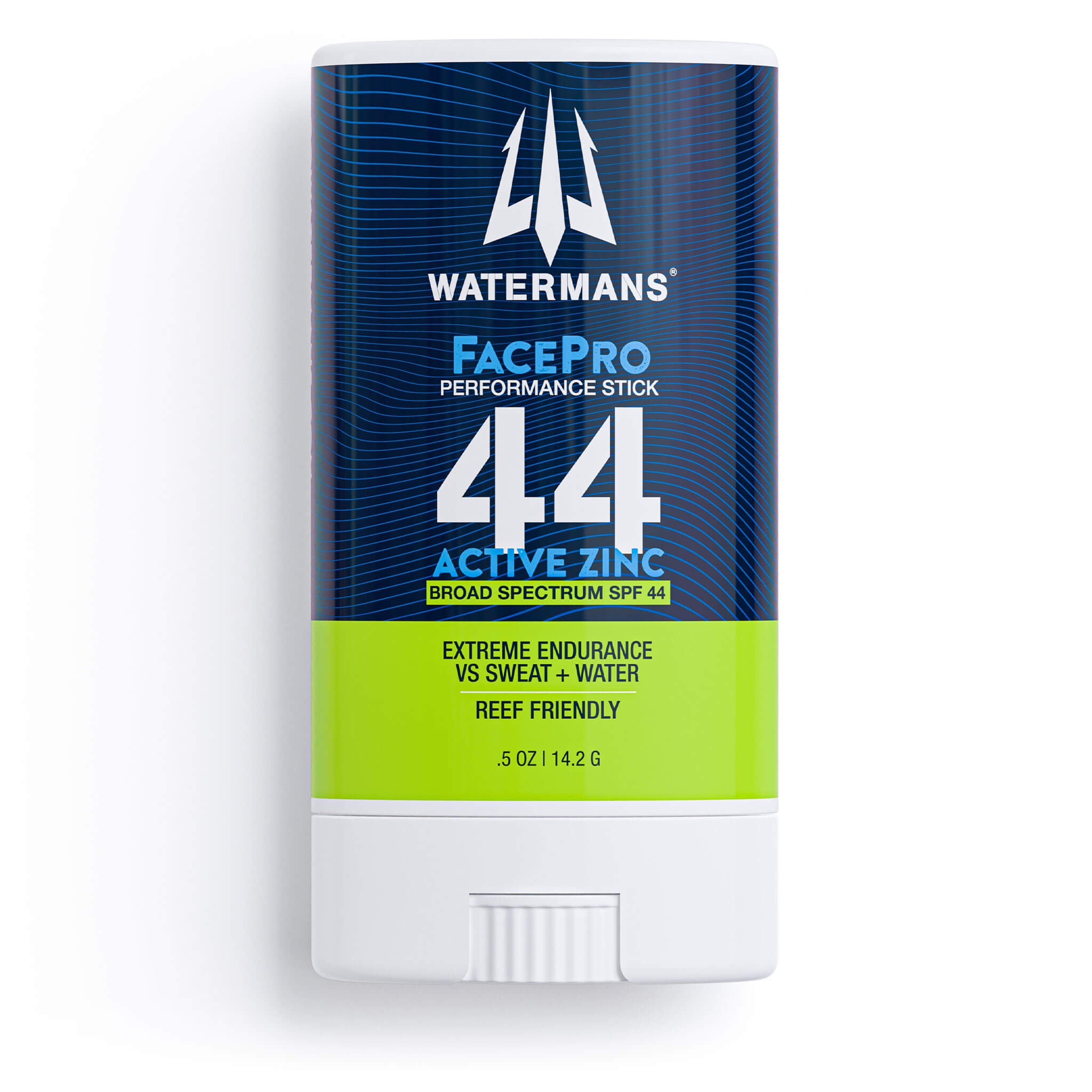
Not every lifeguard shift calls for the same formula. Mineral SPF 55 uses a zinc-based, oxybenzone-free formula and sits at the center of the Aqua-Armor line for full-body coverage during pool or beach shifts. Hydro Lite SPF 55 is a lighter lotion built for lifeguards who want the same 8-hour water resistance without a heavier feel, useful on hot, high-humidity days. The face takes the most direct and repeated sun exposure of any part of a lifeguard's body, and it is also the area most likely to get skipped during a fast reapplication between rescues. FacePro Stick SPF 44 is built for exactly that gap: a precision, no-drip stick that goes on fast without needing to touch a lotion bottle with wet or sandy hands.
How to Apply Sunscreen for a Full Lifeguard Shift
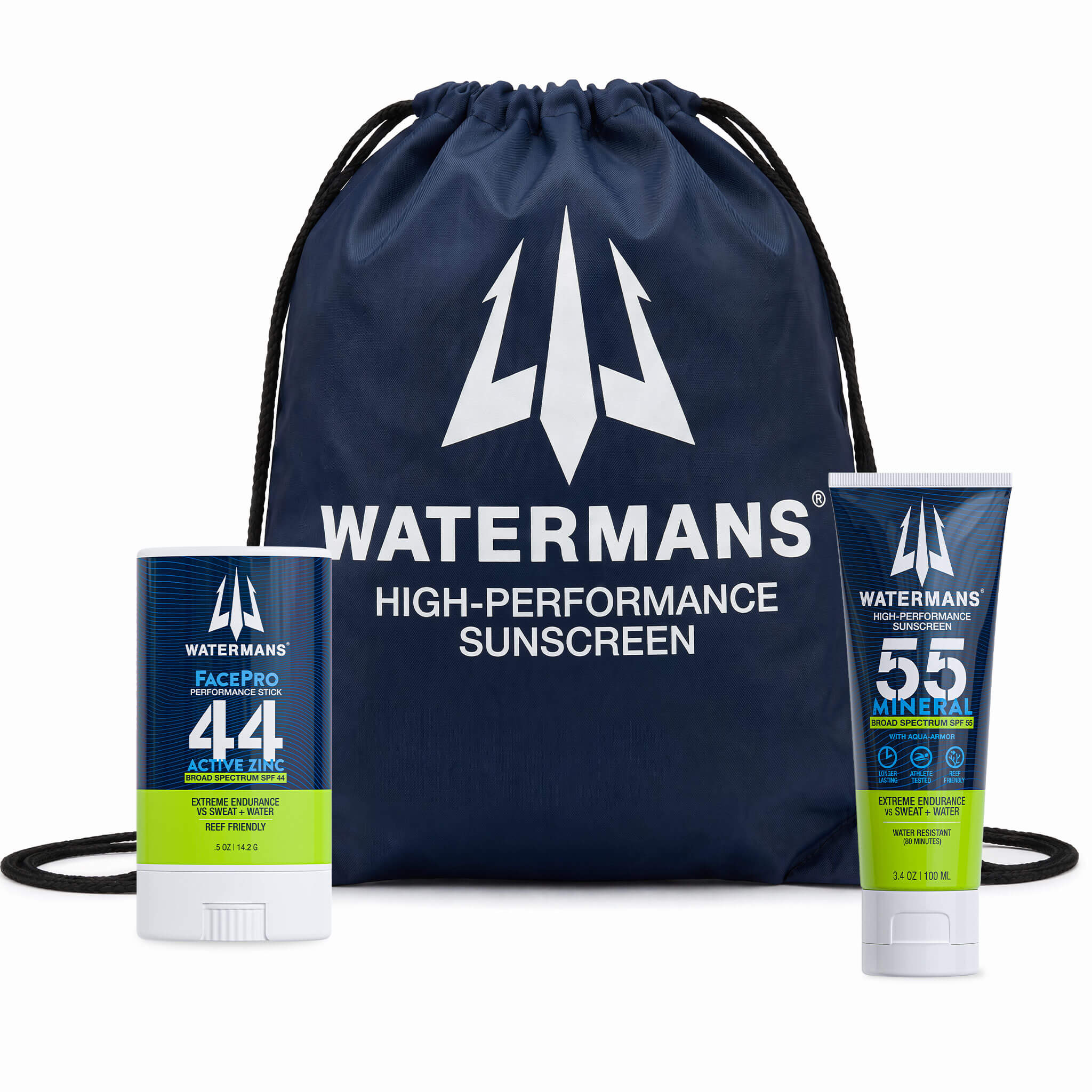
Apply Mineral SPF 55 or Hydro Lite SPF 55 at least 15 minutes before the shift starts, covering all exposed skin evenly, including ears, the back of the neck, and the tops of the feet. Use FacePro Stick SPF 44 for the face and hairline, where sweat and repeated hand contact wear a formula down faster than anywhere else on the body. On shifts longer than 8 hours, or after a rescue that involves extended submersion, reapply as a precaution rather than waiting for visible signs of sunburn, since sunburn is evidence the window has already closed. The Full Sun Kit pairs Mineral SPF 55 with a stick-format product for exactly this kind of full-shift, full-coverage routine.
Pool Guards, Beach Guards, and Open Water: Different Shifts, Same Standard
A pool lifeguard sits above reflective water and concrete deck for most of a shift, both of which bounce UV back onto skin that is already facing the sun directly, effectively doubling exposure compared to standing on grass or sand alone. A beach lifeguard adds wind and sand to that equation, which can wear down a lotion formula faster through friction and repeated wiping, and often means more frequent hand contact with the face while clearing hair or adjusting sunglasses. An open water or lake guard often deals with the least shade of the three and the longest stretches between breaks, sometimes stationed on a boat or tower with no structure nearby to duck under. Event lifeguards covering triathlons or open water races add another variable: hours of standing watch before the exposure of a rescue swim even begins. All three roles share the same underlying problem. Standard 80 minute sunscreen was never tested for a job this long, and each role benefits from the same 8-hour Aqua-Armor standard, applied with the formula that best fits the setting.
Where Lifeguards Overlap with Watermans' Other Watersports Lines
Lifeguards are not the only Watermans customers spending entire days in and around the water. Competitive and open water swimmers face a similar reapplication problem across long training blocks, and the For Swimmers collection is built around that same 8-hour standard. Surfers dealing with constant paddling and wipeouts have the same durability requirement, covered in the For Surfers collection. Every product carrying the Aqua-Armor name across the site is held to the same independently tested standard, viewable in full in the Aqua-Armor collection.
The Water Resistant Myth Lifeguards Run Into Most
No sunscreen is truly waterproof, including Watermans products. Water resistant means a formula has been tested to maintain its labeled SPF for a specific duration of water exposure, not that it cannot wash, sweat, or wear off entirely. Sweat is often the bigger threat on a lifeguard shift, since heat and physical exertion break a formula down even between water entries. Another common misconception is that a higher SPF number compensates for a shorter water resistance rating. It does not. SPF measures protection strength against a fixed exposure; water resistance measures how long that protection holds up under water and sweat. A lifeguard needs both numbers working together, not one covering for the other.
Building a Lifeguard Sun Protection Routine That Actually Holds
Start with a formula tested past the FDA's 80 minute ceiling, since that single spec eliminates most of the reapplication guesswork built into a standard sunscreen routine. Cover the face separately with a stick format that survives wet, sandy hands better than a lotion bottle does. Keep a stick or lip formula within reach at the stand itself, since a product that requires a walk to a bag rarely gets used mid-shift. Treat a full submersion rescue as a trigger to check coverage, not wait for sunburn as the signal, and remember that a long shift under cloud cover still carries UV exposure even when the sun does not feel strong. Outplay the sun, not just outlast the shift.
Key Takeaways
-
8 hours beats 80 minutes on every shift.
Watermans Aqua-Armor formulas are independently tested for 8 hours of water resistance, six times the FDA's 80 minute standard most sport sunscreens are built to. -
The face needs its own plan.
FacePro Stick SPF 44 covers the area that takes the most direct exposure and gets skipped most often during a fast reapplication. -
Water resistant is not waterproof.
No formula holds forever. Treat extended submersion and heavy sweat as reasons to check coverage, not exceptions to the rule.

