

What Is the Best Sunscreen for Surfers?
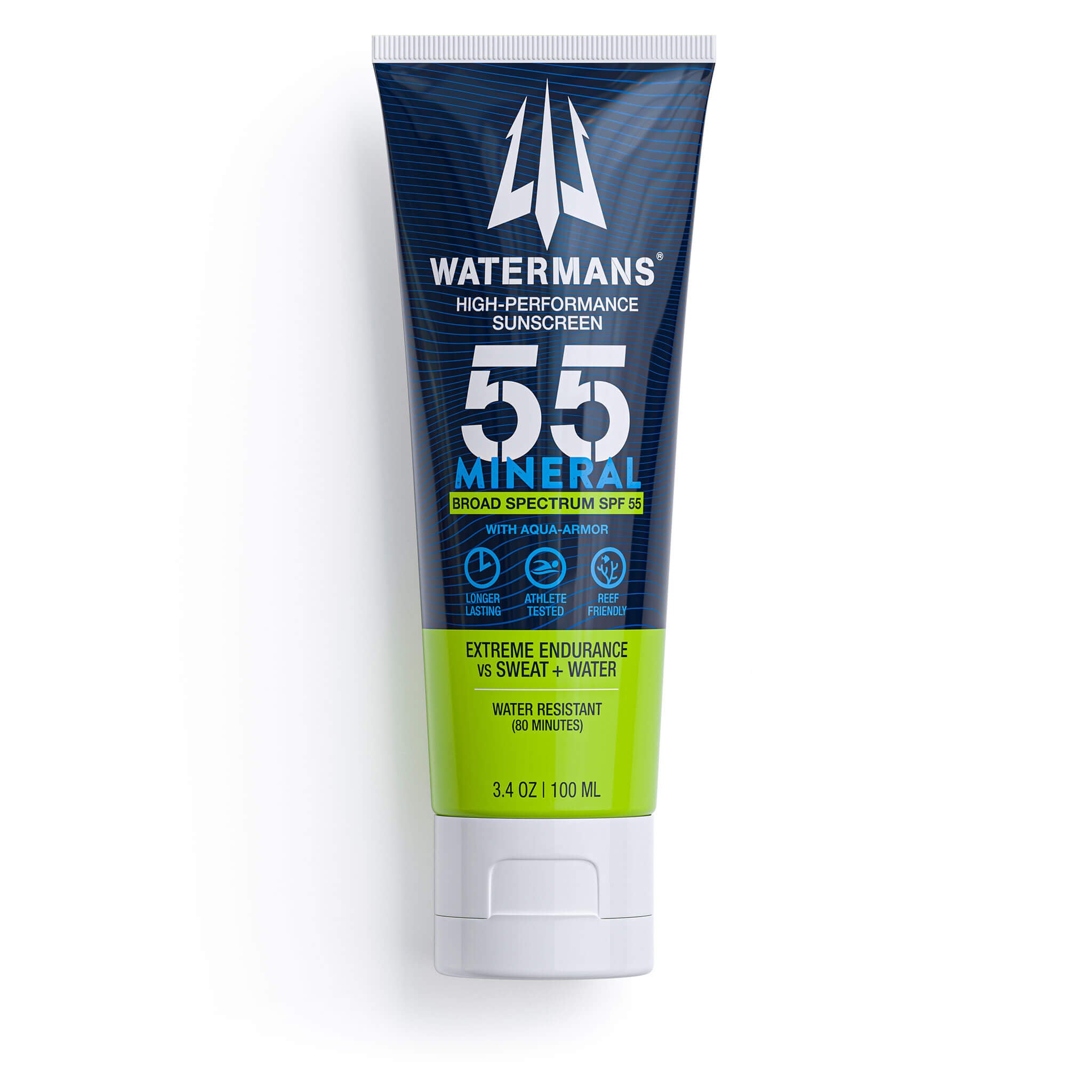
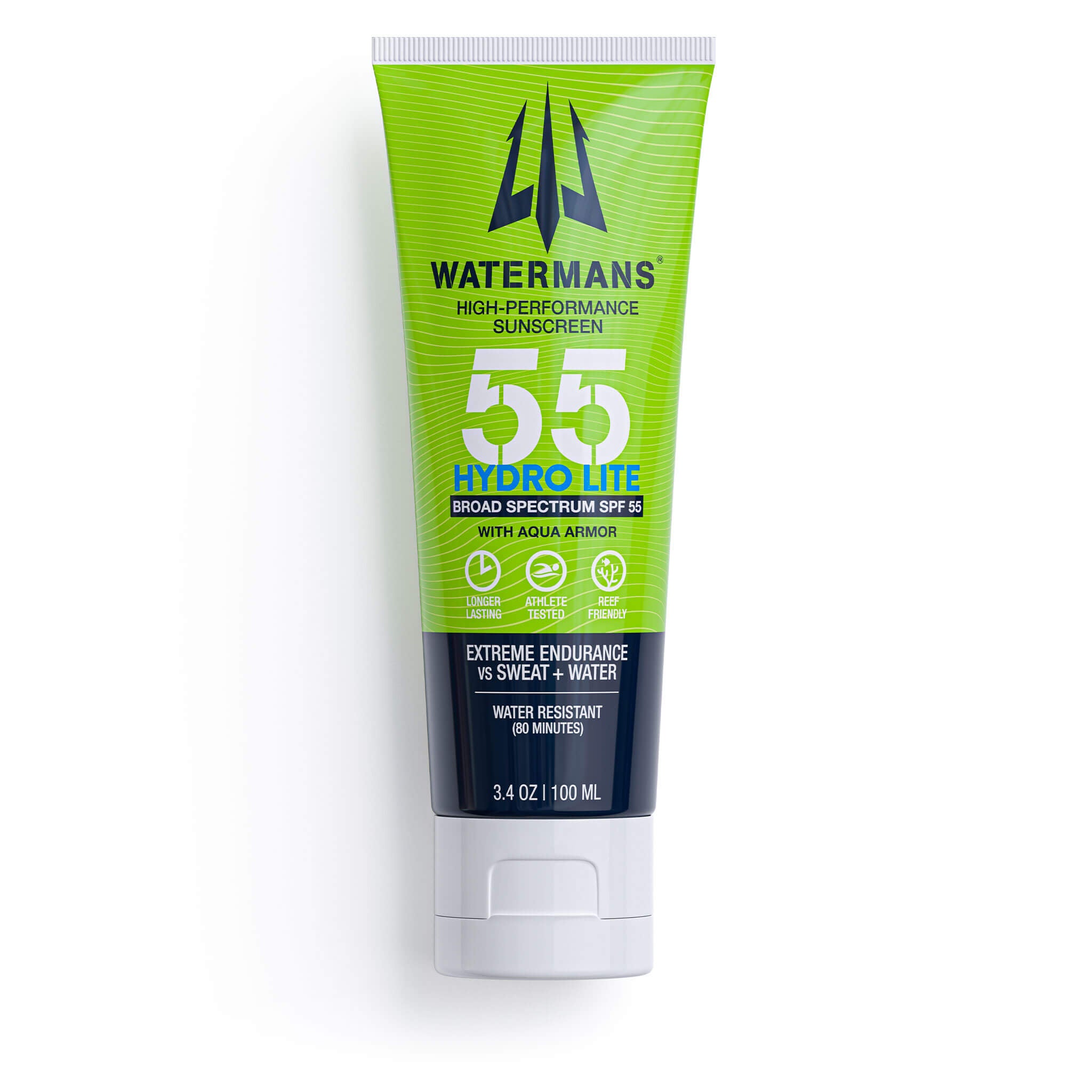
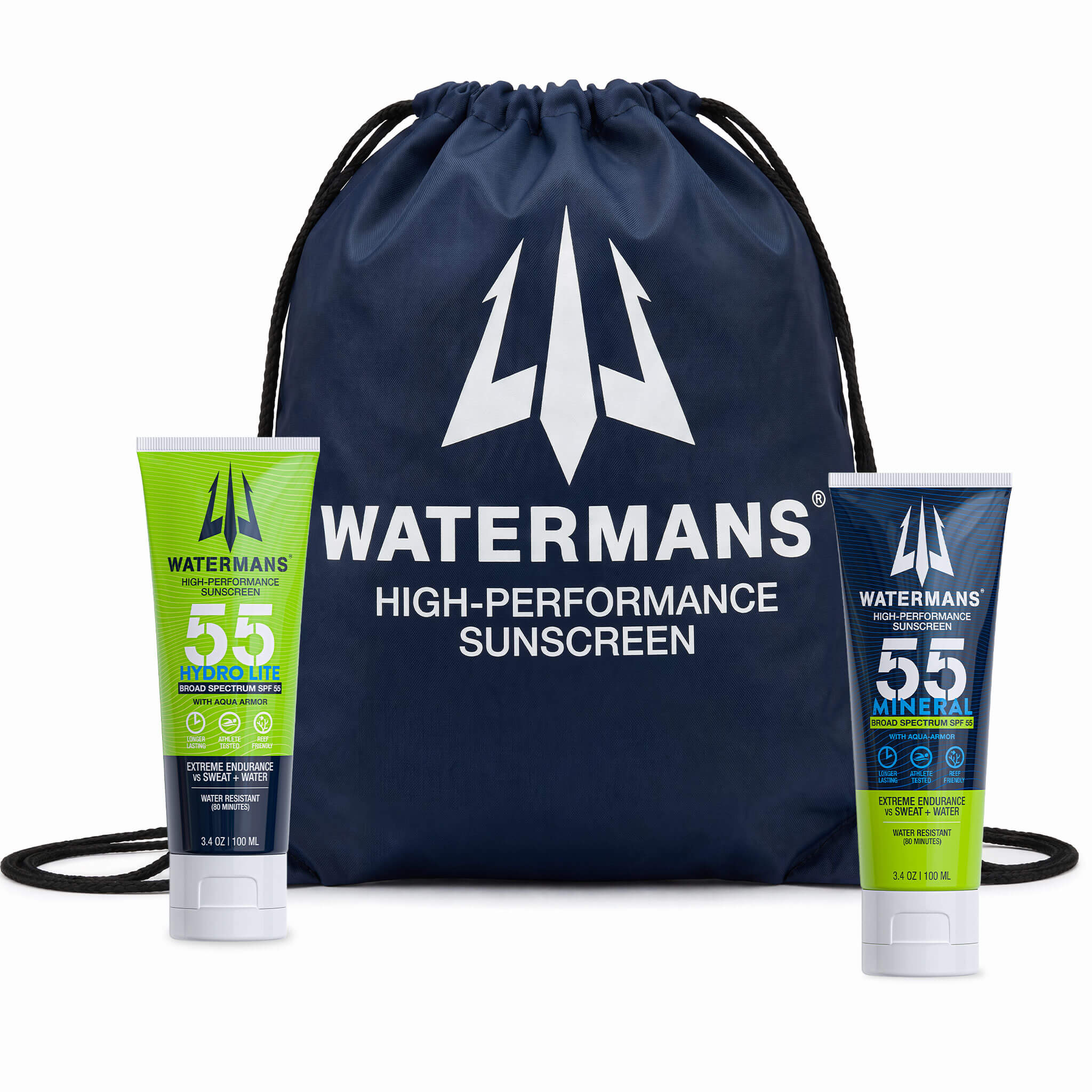
Watermans Mineral SPF 55 and Hydro Lite SPF 55 are independently commissioned immersion tested to 8 hours of water resistance, six times the FDA's 80-minute standard most surf sunscreens are held to. A surf session involves constant paddling, duck diving, and wipeouts, all of which strip a standard formula well before a session ends. The best sunscreen for surfing is one built to survive the actual mechanics of surfing, not just a single wave.
The 8-Hour Difference in the Water
Under FDA guidelines, sunscreen can only claim water resistance for a maximum tested duration of 80 minutes, and most sport sunscreens are built and tested to exactly that ceiling. A two or three hour surf session pushes well past that window long before the paddle back to shore. Watermans tests Mineral SPF 55 and Hydro Lite SPF 55 to 8 hours of water resistance through independently commissioned immersion testing, built specifically for sessions that outlast the FDA's standard.
Mineral or Hydro Lite: Matching the Formula to the Session
Mineral SPF 55 uses a zinc-based, oxybenzone-free formula built for full-session coverage in the lineup. Hydro Lite SPF 55 carries the same 8-hour Aqua-Armor water resistance in a lighter lotion, useful on hot days or for surfers who find a heavier mineral base uncomfortable under a wetsuit collar or rash guard. A heavier formula can also build up along wetsuit seams over a long session, which is worth considering for surfers who wear full suits year-round versus those in boardshorts or a rash guard alone. Both formulas are built for the same durability, the difference is texture, feel, and how each interacts with wetsuit fabric, not protection level.
Face Protection Through Wipeouts and Paddling
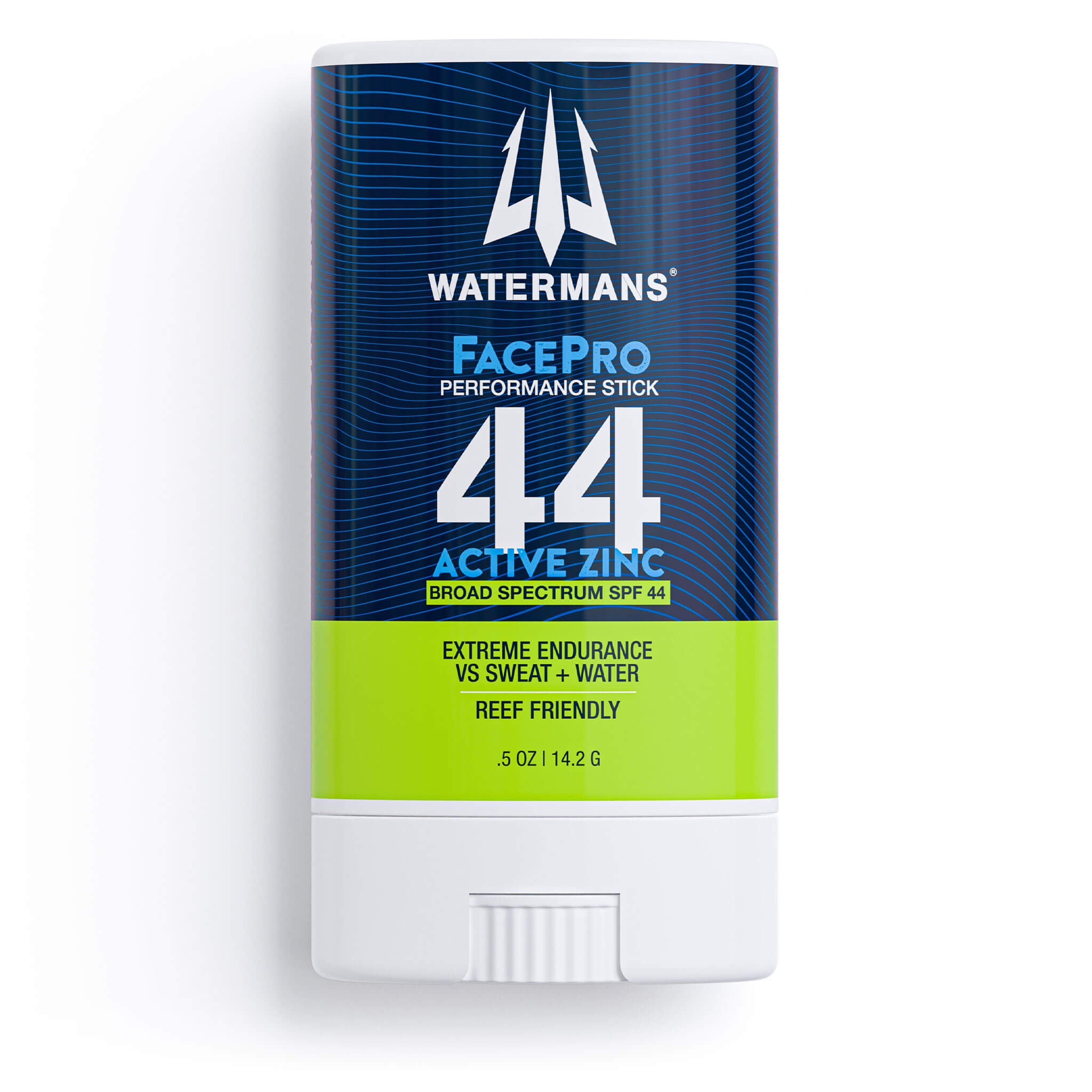
The face takes constant direct exposure during a surf session, both from the sun overhead and from reflection off the water surface, and it is also the area most likely to get missed during a fast reapplication between sets. FacePro Stick SPF 44 is built for that gap: a precision, no-drip stick that applies clean with wet, salty hands, without needing to towel off first or risk product running into the eyes during a duck dive.
How to Apply Sunscreen Before a Surf Session
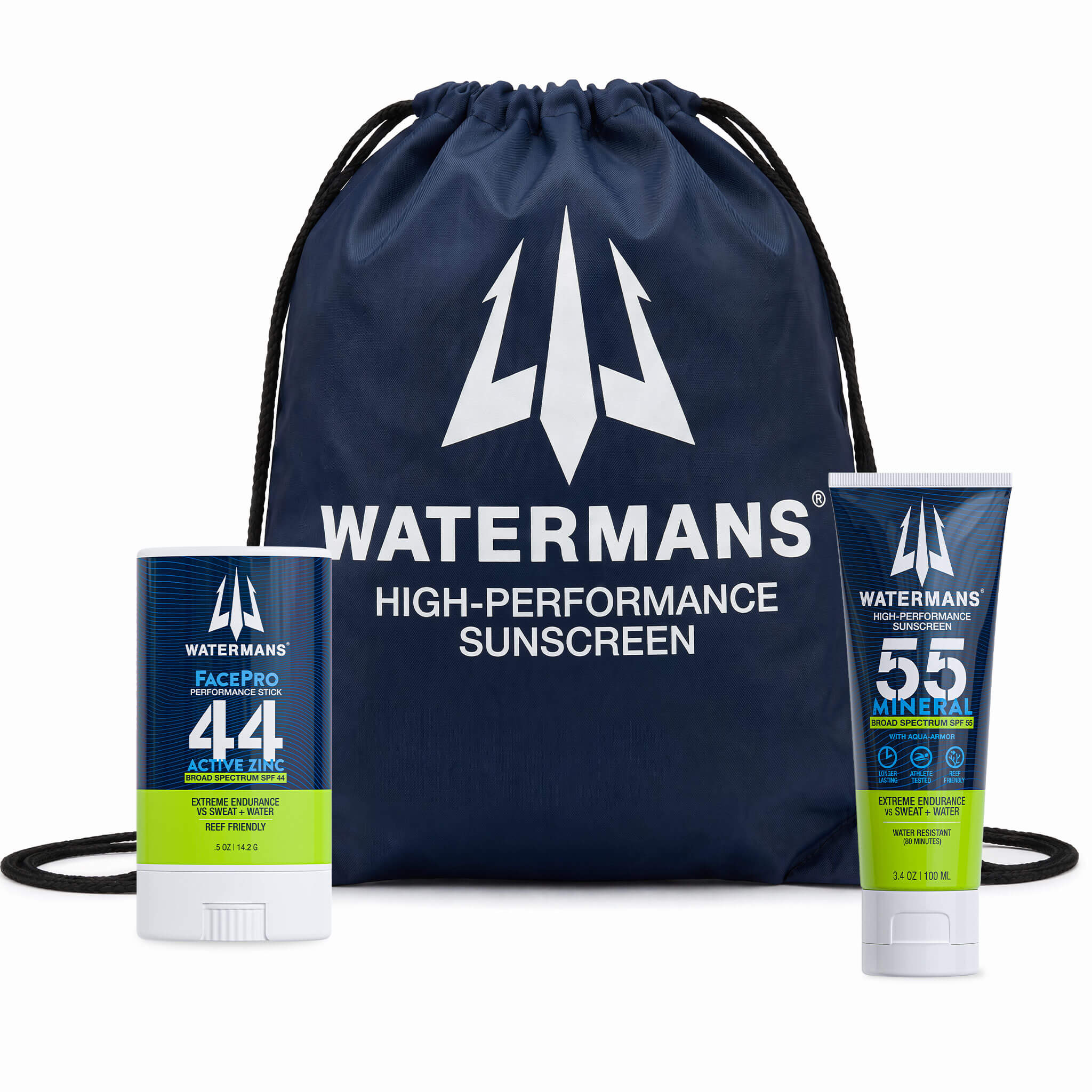
Apply Mineral SPF 55 or Hydro Lite SPF 55 at least 15 minutes before paddling out, covering the shoulders, upper back, and backs of the legs, areas surfers commonly miss since they are hard to reach solo and sit directly under overhead sun during a paddle out. A wetsuit line at the neck or ankle is a common gap too, since sunscreen applied right up to the edge of a wetsuit can wear off from the friction of neoprene rubbing against skin repeatedly over a session. Use FacePro Stick SPF 44 for the face and ears immediately before entering the water. The Full Sun Kit pairs Mineral SPF 55 with a stick-format product for exactly this kind of full-session, full-coverage routine in one purchase.
Reef-Friendly Coverage for Surf Breaks
Hydro Lite SPF 55 and FacePro Stick SPF 44 are formulated without oxybenzone or octinoxate, making them reef-friendly options for surfers paddling out near reef breaks. Mineral SPF 55 is formulated without oxybenzone specifically. Reef-friendly status varies by formula rather than applying as a blanket claim across the full lineup, so it is worth checking the specific product before assuming coverage. This distinction matters more at reef breaks than at beach breaks over sand, since sunscreen runoff has a more direct path to coral in shallow reef water.
Dawn Patrol, Midday Sessions, and Why Timing Changes the Math
A dawn patrol session before the sun is directly overhead carries lower UV exposure than a midday paddle out, but water reflection still adds meaningful exposure even in early light, since surfers spend the entire session facing up and out toward open water and sky rather than down toward the ground. A midday session under a high sun compounds direct overhead exposure with reflection off the water surface, which is the combination that burns fastest and hardest. The 8-hour Aqua-Armor window matters most on midday and multi-hour sessions, where a standard 80-minute formula would need three or more reapplications that rarely happen mid-session.
The Water Resistant Myth Surfers Run Into Most
No sunscreen is truly waterproof, including Watermans products, and no sunscreen sold in the U.S. can legally carry that claim. Water resistant means a formula has been tested to maintain its labeled SPF for a specific duration of water exposure, not that it cannot wash off entirely under repeated wave impact. A long session with heavy wipeout activity wears down any formula faster than a calmer swim would, which is worth factoring into when a surfer chooses to check coverage rather than waiting for a fixed time to pass.
Building a Surf Sun Routine That Actually Holds
Start with a formula tested past the FDA's 80-minute ceiling, since that spec removes most of the reapplication guesswork a multi-hour session creates. Cover the face separately with a stick format that survives salt water and wet hands better than a lotion bottle does. Treat a long wipeout-heavy session as a reason to check coverage on exposed areas like the shoulders and upper back, since these zones see repeated direct exposure with no shade the entire time. Outplay the sun, not just outlast the session.
Key Takeaways
-
8 hours covers a full surf session, not just one wave.
Mineral SPF 55 and Hydro Lite SPF 55 are independently tested to 8 hours of water resistance, six times the FDA's 80-minute standard. -
The face needs separate coverage from the body.
FacePro Stick SPF 44 targets the zones a lotion misses during wipeouts and paddling. -
Reef-friendly status is formula-specific, not a lineup-wide claim.
Check the individual product before assuming a blanket reef-safe claim across every formula.

