

What Is the Best Sunscreen for Boaters?
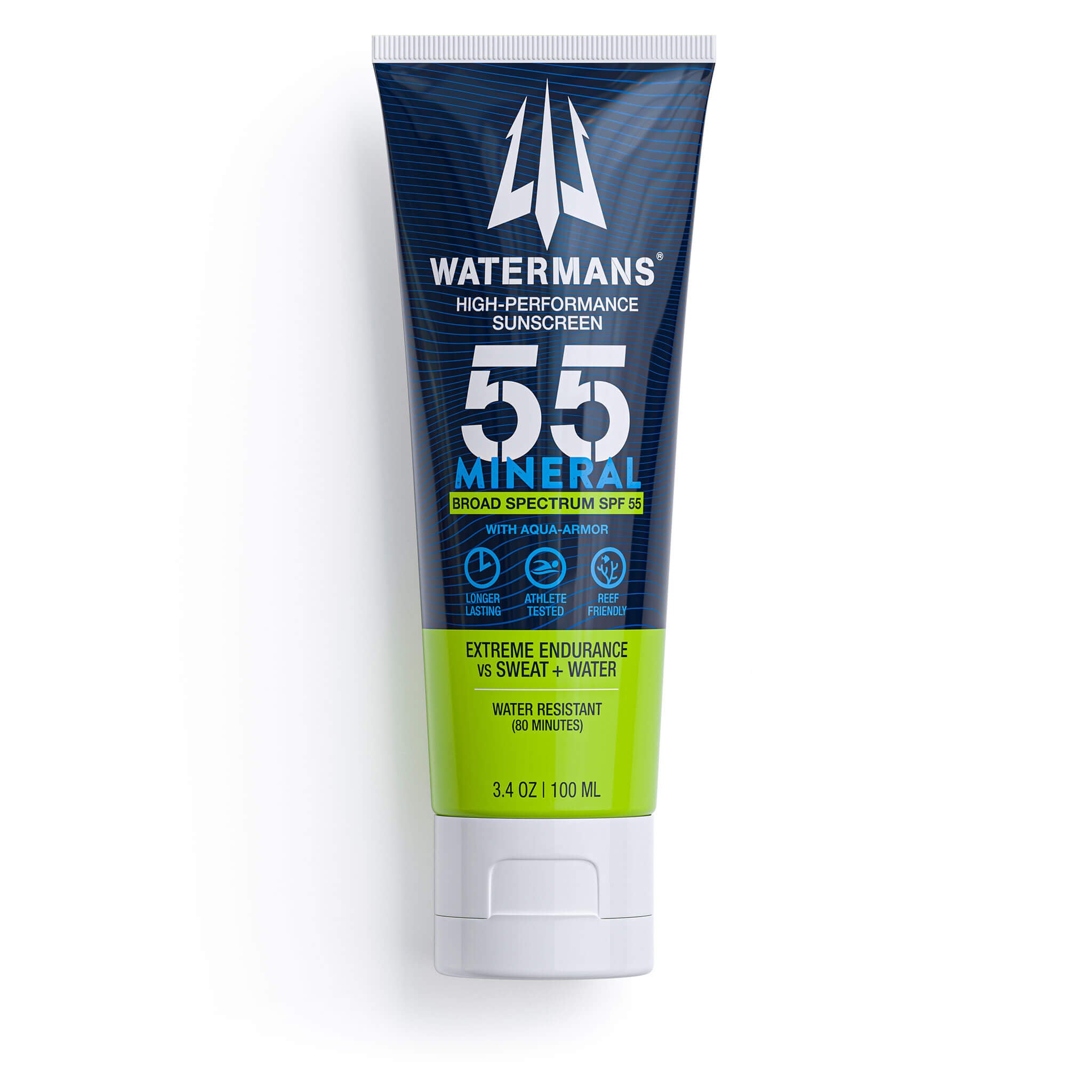
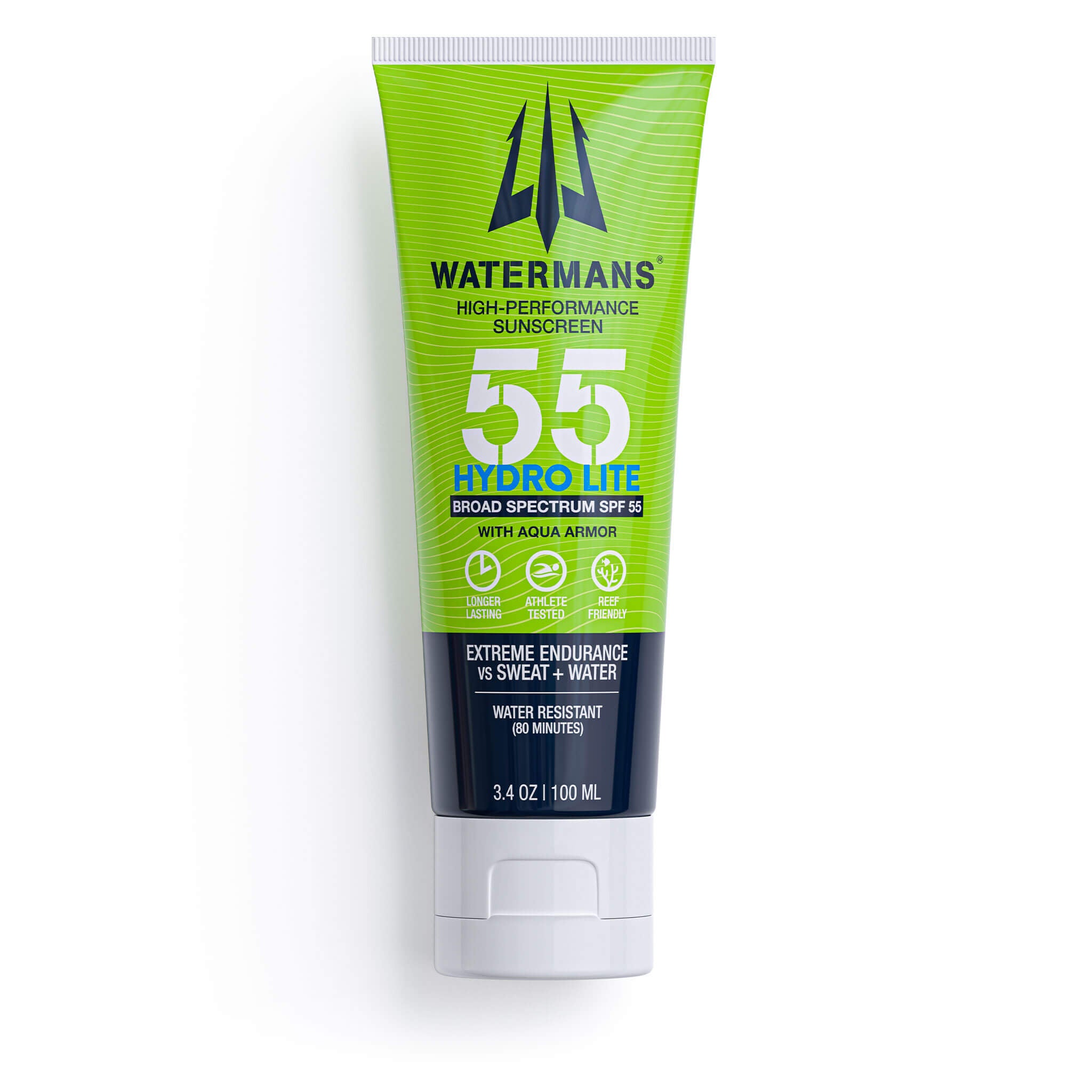
Watermans Mineral SPF 55 and Hydro Lite SPF 55 are independently commissioned immersion tested to 8 hours of water resistance, six times the FDA's 80-minute standard most sport sunscreens are held to. A day on the boat is not a swim. It is a run out, hours of fishing or cruising with no shade, and a run back, all of it under direct sun plus reflection coming off the surface. The best sunscreen for boating is one tested to the length of the trip rather than the length of a single dip.
The 8-Hour Difference From Launch to Load-Out
Under FDA guidelines, sunscreen can only claim water resistance for a maximum tested duration of 80 minutes, and most sport sunscreens are built and tested to exactly that ceiling. A half-day charter runs three to five hours. A full day offshore runs eight or more. At 80 minutes, that is four to six reapplications before the boat is back on the trailer, which almost nobody actually does while running gear or working a rod. Watermans tests Mineral SPF 55 and Hydro Lite SPF 55 to 8 hours of water resistance through independently commissioned immersion testing, built for the shape of a real day on the water.
Why the Sun Hits Harder on a Boat
Open water gives you the sun twice. Once directly overhead, and again reflected off the surface into the underside of the chin, the nose, the ears, and anywhere a hat brim does not reach. There is almost no shade on most boats, and a bimini top covers a smaller footprint than people assume once the sun moves off vertical. Moving air is the third factor and the most deceptive one, because wind strips away the heat that normally tells you that you are burning. Boaters routinely feel comfortable right up until the moment they step back onto the dock and see the damage.
Will Sunscreen Stain Vinyl or Gelcoat?
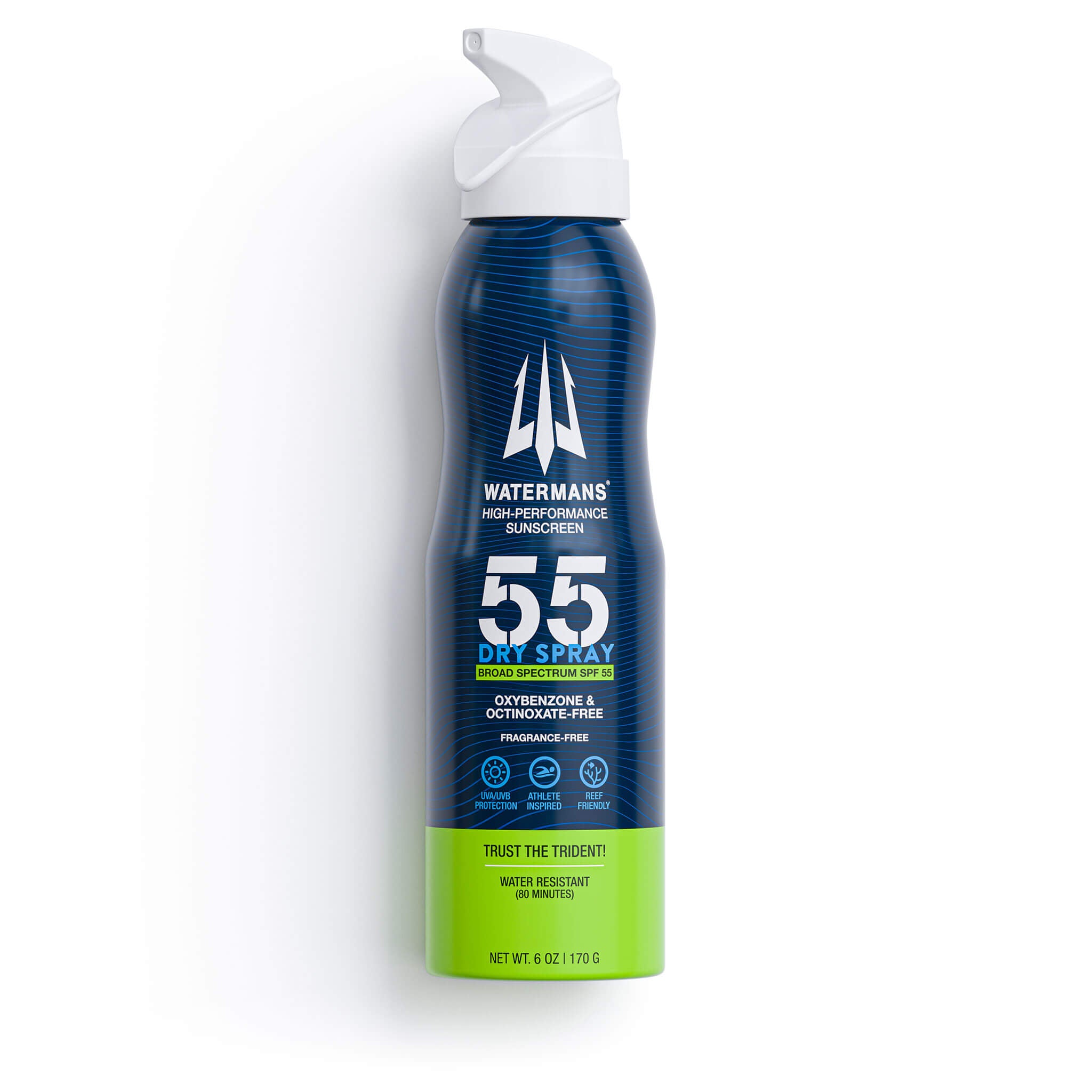
This is the question boaters ask most and the one the sunscreen category answers least. Avobenzone is the ingredient most commonly linked to marks on vinyl seating and gelcoat, and it appears in a large share of chemical sunscreens sold for outdoor use. Watermans Mineral SPF 55 is zinc based and contains no avobenzone, which makes it the straightforward choice for anyone protecting upholstery. Hydro Lite SPF 55 and Dry Spray SPF 55 each contain avobenzone at 3.0% and deliver the same protection on skin, so the practical approach with those two is to wipe any transfer off seating before it sets in the sun. We cover this in depth in what actually stains a boat.
Mineral, Hydro Lite, or Dry Spray: Matching the Formula to the Trip
Mineral SPF 55 uses a zinc-based formula and carries the 8-hour Aqua-Armor water resistance claim, built for long days offshore and for anyone who wants the most conservative option around boat surfaces. Hydro Lite SPF 55 carries the same 8-hour claim in a lighter lotion, which tends to feel better in heat and humidity across a long day in the console seat. Dry Spray SPF 55 is the fast option for shoulders, arms, and the tops of the feet, particularly with wet or salty hands, and it is water resistant to the standard 80-minute duration rather than the 8-hour Aqua-Armor claim, so it works best as a touch-up alongside a lotion base rather than as the only layer.
Face and Ear Coverage on the Water
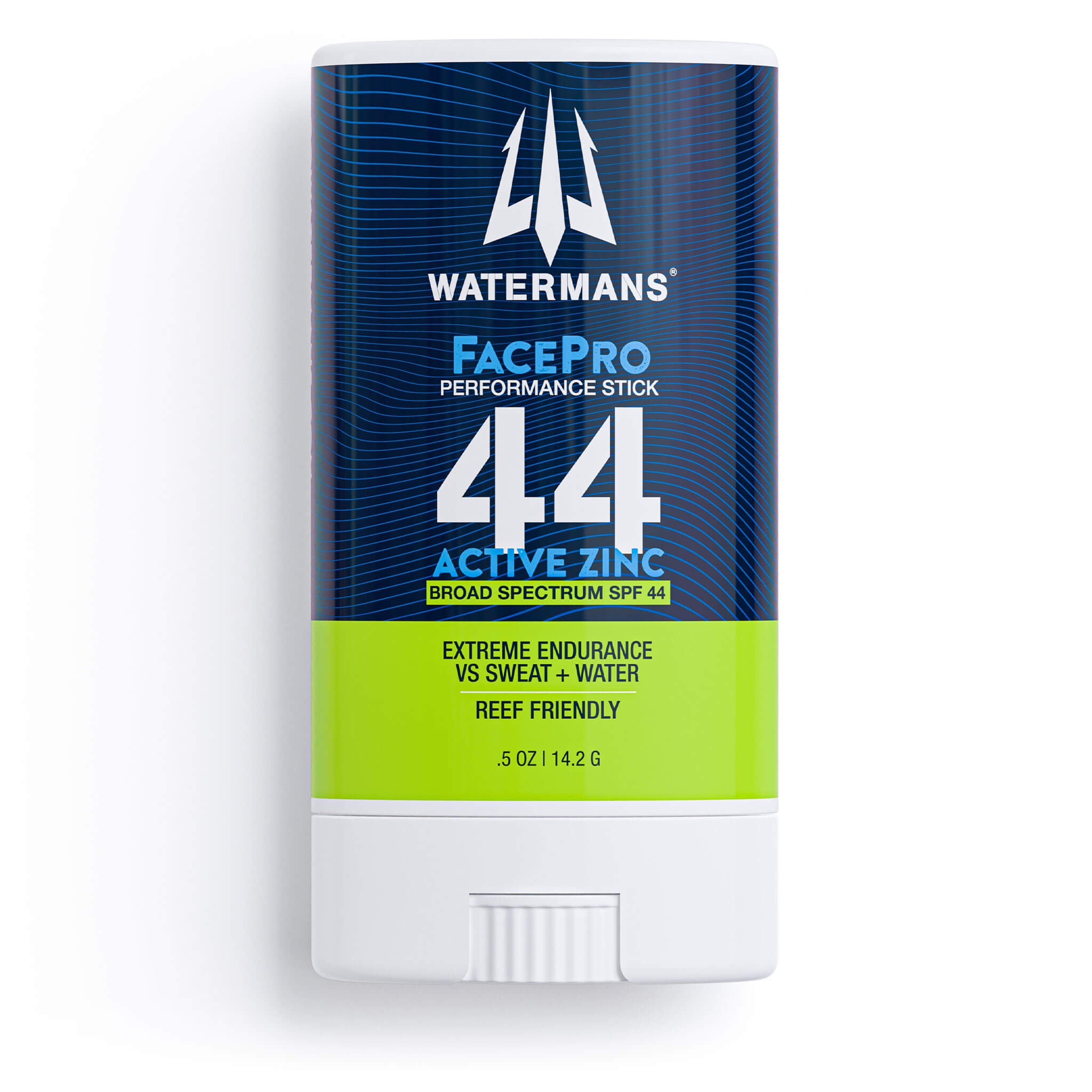
The face takes both direct and reflected exposure the entire time a boat is running, and the ears, the nose, and the underside of the chin catch light bouncing up off the water that a hat does nothing about. It is also the area most likely to get skipped during a fast reapplication with wet, salty, or bait-covered hands. FacePro Stick SPF 44 is built for that gap: a precision, no-drip stick that goes on clean without opening a lotion bottle, and stays put through sweat, wind, and spray without running into the eyes at speed.
How to Apply Before Leaving the Dock
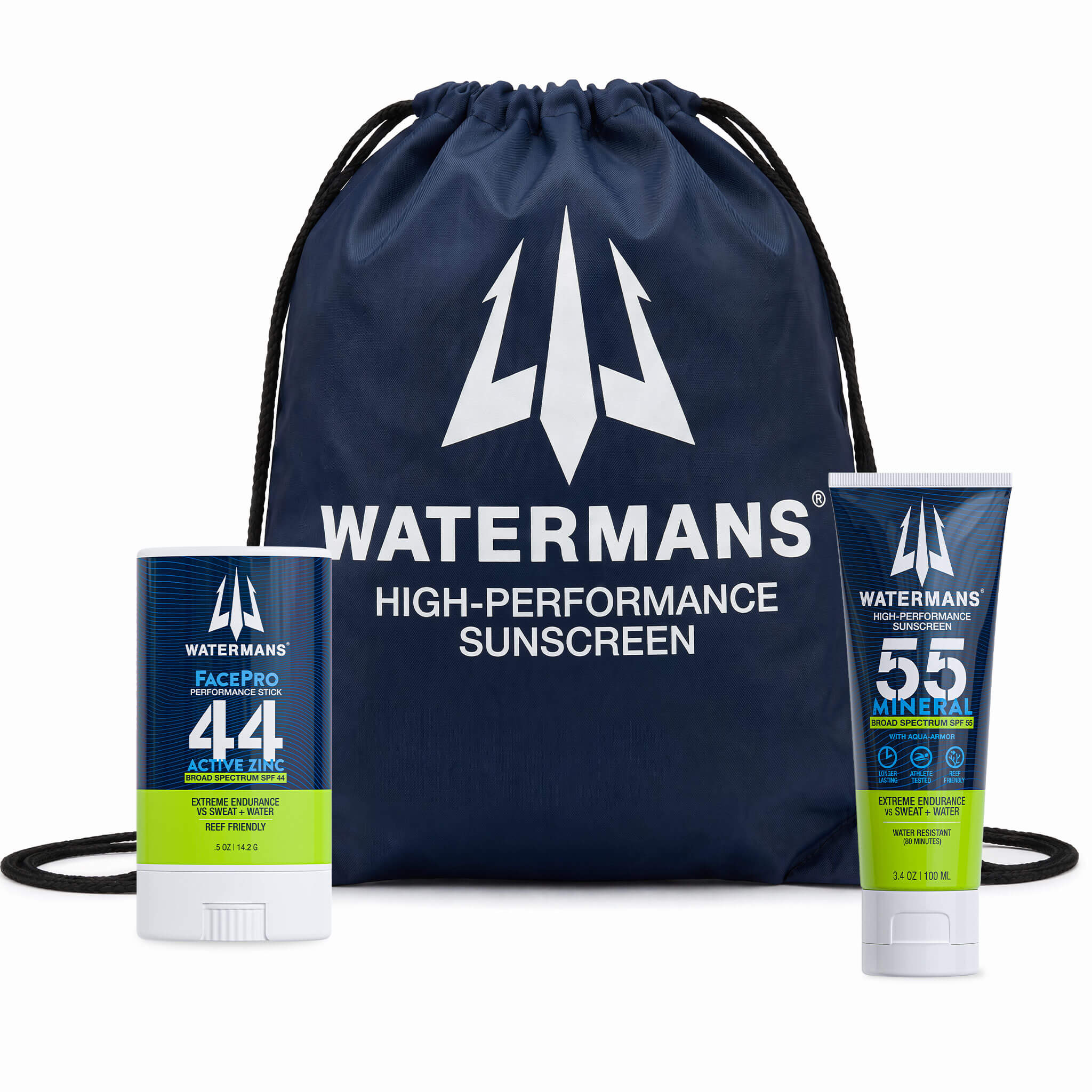
Apply Mineral SPF 55 or Hydro Lite SPF 55 at least 15 minutes before leaving the dock, which also gives the formula time to set rather than transferring straight onto seating. Cover the back of the neck, the tops of the feet, the backs of the legs, and the ears, all areas that are easy to miss solo and sit under direct sun the whole trip. Use FacePro Stick SPF 44 for the face and ears immediately before pulling away. Keep a stick or spray within reach at the helm rather than in a bag below, since a product that requires going and finding it rarely gets used mid-trip. The Full Sun Kit pairs Mineral SPF 55 with a stick-format product for exactly this kind of full-day, full-coverage routine.
Fishing Boats, Sailboats, and Day Cruising
A center console running offshore offers almost no shade and adds hours of wind at speed, which dries and wears a formula faster than still air does. A sailboat trades engine time for long stretches at the rail and repeated line handling, meaning more hand contact and more friction on the forearms than a powerboat day involves. Day cruising and anchoring out adds swimming to the equation, which is where the difference between an 80-minute rating and an 8-hour one becomes obvious across an afternoon of getting in and out of the water. Anglers face the closest version of this problem, covered in more depth in the For Anglers collection.
The Water Resistant Myth Boaters Run Into Most
No sunscreen is truly waterproof, including Watermans products, and no sunscreen sold in the U.S. can legally carry that claim. Water resistant means a formula has been tested to maintain its labeled SPF for a specific duration of water exposure, not that it cannot wear off. Toweling off is the most underrated factor on a boat, since a towel removes sunscreen faster than swimming does and most people towel off several times across a day. A second common misconception is that a higher SPF number makes up for a shorter water resistance rating. It does not. SPF measures protection strength; water resistance measures how long that protection holds. A full day on the water needs both working together.
Building a Boat Sun Routine That Holds
Start with a formula tested past the FDA's 80-minute ceiling, since that single spec removes most of the reapplication guesswork a full day creates. Pick the formula that matches your boat as well as your skin, using Mineral SPF 55 where upholstery is a concern. Cover the face separately with a stick that survives wet and salty hands. Treat toweling off as the trigger to check coverage rather than watching the clock, and remember that an overcast, windy day on the water still carries full UV exposure even when nothing about it feels hot. The full 8-hour lineup is available in the Aqua-Armor collection. Outplay the sun, not just outlast the trip.
Which One for Your Boat
| Product | Choose it if | Water resistance | Contains avobenzone |
|---|---|---|---|
| Mineral SPF 55 | Protecting vinyl and gelcoat matters, or you want the fullest coverage for a long day offshore | 8 hours | No |
| Hydro Lite SPF 55 | You want the same tested duration in a lighter feel for heat and humidity | 8 hours | Yes, 3.0% |
| Dry Spray SPF 55 | You need fast reapplication with wet or salty hands, alongside a lotion base | 80 minutes | Yes, 3.0% |
| FacePro Stick SPF 44 | You want no-drip coverage for the face, ears, and nose at speed | Water resistant, no duration claim | No |
| The Full Sun Kit | You want body and face covered in one purchase | 8 hours | No |
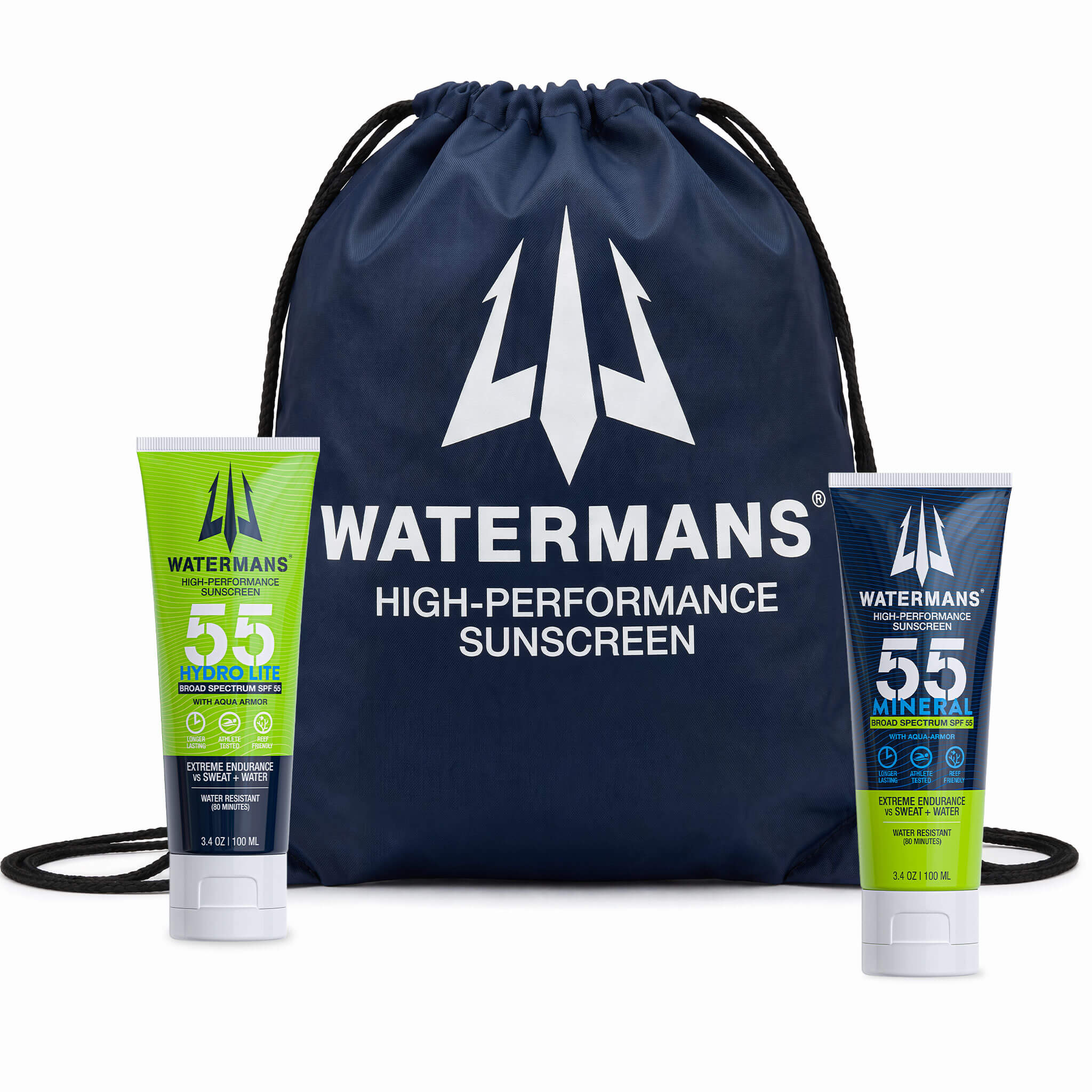
| The Aqua-Armor Kit | You want both 8-hour lotions aboard and a bag to keep them in | 8 hours | Yes, in Hydro Lite |
Avobenzone is the ingredient most often linked to marks on vinyl and gelcoat. All formulas above protect skin to their stated duration. The column is there to match the formula to the boat, not to rank the protection.
Key Takeaways
-
8 hours covers the trip, not just the swim.
Mineral SPF 55 and Hydro Lite SPF 55 are independently tested to 8 hours of water resistance, six times the FDA's 80-minute standard. -
Match the formula to the boat, not just the skin.
Mineral SPF 55 contains no avobenzone, the ingredient most linked to marks on vinyl and gelcoat. Wipe transfer from the other formulas before it sets. -
Toweling off wears sunscreen faster than swimming.
Treat drying off as the cue to check coverage rather than waiting for a set time to pass.

